Harpley, Norfolk, England
Place research page generated from the structured place spine and the companion place markdown.
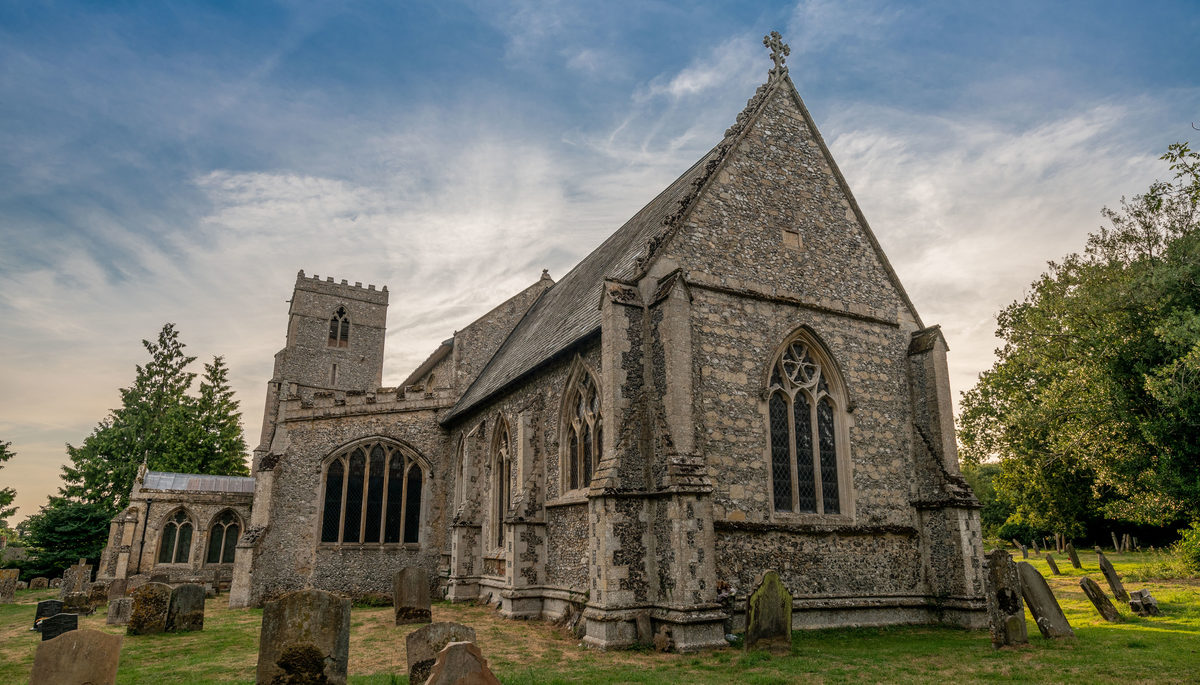
Harpley Manor (Harpley Hall), a major medieval Gurney holding acquired c.1183 through Rose de Burnham and the Hameline de Warenne connection; distinct from the extant Gurney's Manor at Hingham. The church, located about 500 feet from where the manor once stood, survives. https://www.ggmbenefice.uk/our-churches/harpley/harpley-church-history/
Linked ancestors
- G15 Henry Gurnay landholding / property reference
- G20 Thomas Gournay II landholding / property reference
- G21 Thomas Gournay I landholding / property reference
- G23 Edmund Gournay landholding / property reference
- G23 Edmund Gournay individual geography
- G24 John de Gournay IV landholding / property reference
- G24 John de Gournay IV individual geography
- G25 John de Gournay III landholding / property reference
- G25 John de Gournay III individual geography
- G26 Sir William de Gournay III, Knt. landholding / property reference
- G26 Sir William de Gournay III, Knt. individual geography
- G27 Sir John de Gournay I, Knt. landholding / property reference
- G27 Sir John de Gournay I, Knt. individual geography
- G28 Sir William de Gournay II, Knt. landholding / property reference
- G28 Sir William de Gournay II, Knt. individual geography
- G29 Sir Matthew de Gournay, Knt. landholding / property reference
- G29 Sir Matthew de Gournay, Knt. individual geography
- G23 Sir John Gurney, Knt. (d.1408) — Related Related landholding / property reference
- G23 Sir John Gurney, Knt. (d.1408) — Related Related individual geography
- G18 William Gurney V landholding / property reference
- G14 Edmund Gurney (Puritan Divine) Related - brother of G14 Francis Gurney individual geography
Village in north-west Norfolk, England. Coordinates: 52.8088, 0.6486.
The ancestral Norfolk seat of the junior Gournay line from about 1183 (Matthew’s marriage to Rose de Burnham) through the mid-fifteenth century. Held across roughly 250 years of Gurney lordship.
Why this place matters historically
Harpley is one of the two great core manorial records of the junior Norfolk line, paired with Hardingham. If Hardingham and Swathings help show the line’s earliest separateness from the senior Barons of Gournay, Harpley shows the branch’s long-lived consolidation into a recognizable Norfolk gentry house. In the normalized place set, Harpley therefore deserves treatment as more than a simple manor locality: it is one of the principal territorial anchors of the family’s pre-West-Barsham identity. [DG-I] [DG-II] [Blomefield]
It also has a second life in the project, because the structured layer correctly preserves a later Tudor reconnection through Henry Gurney (G15). Henry’s research companion notes that he repurchased Harpley manor in 1587, and his son Edmund later served as rector there. That means Harpley is not only a medieval junior-line seat but also a place of deliberate later family recovery and memory. [Henry G15 companion]
Gurney ancestors holding here
| Ancestor | Gen | Period | Notes |
|---|---|---|---|
| Sir Matthew de Gournay | G29 | fl. c. 1180–1220 | Acquired through marriage to Rose de Burnham c. 1183 |
| William de Gournay II | G28 | fl. c. 1210–1250 | Lord of Harpley; attested Norfolk records 1234, 1243 |
| Sir John de Gournay I | G27 | fl. c. 1240–1280 | Rebel baron at Lewes 1264; crusader with Edward I 1270 |
| Sir William de Gournay III | G26 | fl. c. 1260–1300 | Sold Harpley to brother John the rector in 1294 |
| John, Rector of Harpley | collateral | d. 1332 | Buried in the chancel of St Lawrence |
| John de Gournay III | G25 | fl. c. 1300–1353 | Recovered Harpley as nephew-heir on Rector John’s death |
| John de Gournay IV | G24 | fl. c. 1330–1370 | Held the first recorded manorial court at Harpley in 1354 |
| Edmund Gournay | G23 | d. 1387 | Held Harpley while establishing West Barsham via Katherine de Wauncy |
| Thomas Gournay I | G21 | fl. c. 1408–1450 | Inherited by collateral succession |
| Thomas Gournay II | G20 | d. 1471 | Chose burial in the chancel of St Lawrence in his will; left 40s for works at the church, a high-altar gift, and a legacy to every Harpley householder |
| Henry Gurney | G15 | d. 1615/16 | Repurchased Harpley manor in 1587 |
Primary-source hooks
- Feet of fines, Norwich, 21 Mar 1202/3 — Emma de Herpelay v. Matthew de Gurnay, 20 acres in Harpley (PRS n.s. 27; DEEDS 01770391). See “The 1202/3 fine” section below.
- Manorial court roll 1354 — BL Add. MSS. 8841, fol. 112.
- 1294 conveyance deed (William III to Rector John) — earliest surviving Gournay seal with the engrailed cross. [DG-I-339–341]
- 1332 advowson presentation in Blomefield, History of Norfolk, vol. viii, p. 455.
- 1587 repurchase by Henry Gurney — needs a direct topographical or deed citation. [Henry G15 companion]
St Lawrence Church
Surviving parish church on the site the Gournays patronized for generations. Medieval bench-end carvings survive, and the engrailed-cross arms appear carved in stone. John, Rector of Harpley, was buried in the chancel. The church is the natural hero-image anchor for the medieval Harpley line and also keeps the later Tudor reconnection visible because Henry Gurney’s son Edmund became rector there in 1620.
Interpretive note
Harpley is one of the strongest examples in the project of a place that should not be flattened into one time-slice. It has at least two major Gurney phases:
- the medieval junior-line core manor from Matthew through Thomas II;
- the later Tudor recovery and clerical reconnection through Henry G15 and Edmund.
Gurney’s Manor name caution
Do not conflate Harpley’s medieval Gurney manor with Gurney’s Manor, Hingham. The DiCamillo Companion’s Gurney’s Manor entry is explicitly for Hingham, Norfolk, gives a Hingham-area location, and describes a fully extant Grade II country house with earliest elements possibly dating to the 1570s. That site is geographically separate from Harpley and belongs in research/places/hingham-norfolk.md.[1]
Harpley remains a major medieval and Tudor Gurney manor, but the phrase “Gurney’s manor in Harpley” should be used descriptively, not as a proper-name reference to the extant Hingham house.
St Lawrence: advowson, chancel, and visible Gurnay memory
St Lawrence is not merely a parish backdrop for Harpley; it preserves the family as patrons, rectors, builders, and heraldic memory. Blomefield’s Harpley descent places the manor in the Gurney line through Rose, daughter and heir of Reginald, who was married to Matthew de Gurney, lord in her right by about 30 Henry II. The same descent later records Edmund de Gurnay presenting to the church in 34 Edward III, John Gournay presenting in 1387, Thomas Gurnay presenting in 1443, William Gurnay in 1485, and Anthony Gurnay in 1511 before the manor was conveyed away from the family in the 1530s.[2]
The church fabric itself carries the medieval patronage story. A local church-history page states that the church was enlarged in 1294-1332 during the incumbency of John de Gurnay, that the chancel was erected by him in the early fourteenth century, and that the chancel arch is thought to have been built by John de Gurnay, Rector 1294-1332.[3] It also records the Latin marginal inscription formerly around the priest’s brass in the chancel:
“Hic jacet corpus Joh’is de Gurnay quondam Rectoris Paronique hujus ecclesie cujus anime propicietur Deua. Amen”[3]
That reading is rough in the web transcription, but the substance is important: Harpley remembered John as both former rector and patron of the church. A chalice was reportedly found there in 1820.[3]
The last medieval Gurney lord’s will makes the family’s bond to this chancel explicit. Thomas Gournay II (G20) directed in 1469/70 that his body be buried “infra cancellum ecclesie parochialis Sancti Laurencij martiris de Harpele” — within the chancel of the parish church of St Lawrence the Martyr of Harpley — if he died there (with the Norwich Greyfriars as the alternative if he died at his town house), and left 13s 4d to the high altar, 40s for works and vestments at Harpley church, and a small sum to each householder of the village — a living-community legacy paired with an identical provision for West Barsham. He thus chose the chancel where the rector-patron John de Gurnay had been laid nearly a century and a half earlier.[4]
The modern visitor description independently preserves the same core tradition: the chancel is thought to have been built by Rector John de Gurnay, who held the living 1294-1332; his family had the advowson from 1184; the Gurnays/Gournays/Gurneys held a manor at Harpley from about 1153-1401; and later family members Christopher and Edmund also served as priests there.[5] The same page notes that the Gurney shield, argent a cross engrailed gules, could be seen on shields held by angels in the nave roof and on the second shield from the west on the south aisle parapet.[5]
This makes Harpley a rare place where the direct line’s manorial, ecclesiastical, and heraldic evidence remain mutually visible: manor descent, advowson, rectors, chancel memory, roof angels, and exterior shields all point to the same family presence. The National Churches Trust profile is briefer but corroborates the core architectural claim that the chancel was added in the early fourteenth century by John De Gurney.[6]
The Gazetteer of Markets and Fairs adds one more administrative detail: on 5 June 1307 Edward I granted a fair at Harpley to John de Gurnay, parson of the church of Harpley, to be held at the manor on the vigil and feast of St Lawrence.[7]
Open items
- Pull Blomefield vol. viii, pp. 452–459 for a complete manorial descent.
- Check BL Add. MSS. 8841 for other Harpley manorial records beyond the 1354 entry.
- Confirm whether the 1294 conveyance deed survives in NRO collections.
- Add the 1587 repurchase citation directly into this file.
- Audit any generated display text that says “Gurney’s manor in Harpley” so it cannot be mistaken for the extant Gurney’s Manor at Hingham.
Sources
- Daniel Gurney, Record of the House of Gournay, Part I (1848), pp. 277–279, 339–341. [DG-I]
- DG-II, pp. 325–363 (Harpley church chapter and later family material). [DG-II]
- Blomefield, History of Norfolk, vol. viii, pp. 452–459. [Blomefield]
research/people/g15-henry-gurney-fact-sheet.research.md
Crosslinks
research/people/g29-matthew-de-gournay-fact-sheet.research.mdresearch/people/g15-henry-gurney-fact-sheet.research.mdresearch/places/west-barsham.mdresearch/places/hardingham.md
Armstrong 1781 — Uphall Manor 1325 deed, 1332 nephew-grant, 1297 St James’s Day fair, and the rector’s stone in 1781
Mostyn John Armstrong, The History and Antiquities of the County of Norfolk, vol. 5 (Norwich, 1781), Freebridge Hundred and Half entry for Harpley, supplies four specific Gurney-era details for the parish that complement the medieval-descent narrative already on this file.
1297 (25 Edw. I) royal grant of an annual fair on St James’s Day. Armstrong records that the Harpley fair was “granted in the 25th of Edward I. to John de Gourney, lord, patron and rector of the town; and it belongs to the rector for the time being.” The fair was held on 25 July — the feast of St James the Apostle (matching the parish church’s St Lawrence dedication via the medieval Norfolk pilgrim-route economy). This is the earliest specific royal grant of an economic right at Harpley to a Gurney rector-patron.
1325-11-26 Uphall Manor deed (verbatim witness list). Armstrong reproduces a deed dated at Harpley on 26 November 18 Edward II (1325): “Walter son of Robert de Meleford, grants to his lord, sir John de Gourney, rector of the church of Harpley, his messuage called Uphall, with all the homages, and services of his free tenants, view of frank-pledge, free bull and boar, all perquisites of court, and all other liberties late Ralph’s, son of Walter de Manors, with wards, reliefs, escheats, &c. with all the lands that Mariona, late wife of the said Walter, holds for life… the said John de Gourney paying one clove per ann.”
The named witnesses are: Sir Henry de Walpole; Thomas de Feltham; Edmund Laurence; Oliver de Massingham; Ralph de Walsingham; William de Harplee. These are the working witnesses of the rector John’s economic acquisitions in the late 1320s — a working Walpole / Feltham / Massingham / Walsingham / Harplee circle.
1332-12-21 nephew-grant to John III + Jane. Armstrong continues: “And the said manor, tenements, &c. were by deed of the said John de Gourney, dated on Monday the feast of St. Thomas the Apostle, in the 6th year of king Edward III. granted to his nephew, John de Gourney, and Jane his wife, and their heirs.” This is the conveyance that transfers Uphall (with the rest of the Harpley estate) into the lay nephew’s line — the same nephew-heir already preserved on this file as G25 John de Gournay III. The date (Monday, 21 December 1332) is the same year the rector died (6 Edw. III), so the grant was either a pre-death transfer or a deathbed arrangement.
1297 + 1325 + 1332 dated chain. The three Armstrong dates compress the Gurney-rector’s economic-rights consolidation at Harpley into a 35-year window: 1297 fair grant; 1325 Uphall acquisition with full lord-tenant rights; 1332 transfer to the nephew.
1781 observation on the rector’s chancel stone. Armstrong’s eye-on-the-stone record from 1781 adds physical-monument detail to the rector John’s chancel-floor grave-stone already noted on this file. Armstrong: “On the pavement of the chancel lies an old marble grave-stone, whereon was the portraiture or effigies of a priest, with two shields and a rim of brass, now torn off: by the incision of the stone made to let the letters in on the rim, it appears to be — ‘Hic Jacet corpus Folas de Gournay, quonda’ rectoris et patroni hujus ecclesie. cuj; a[ni]e p[ro]pitietur Deus, Amen.’ — He died rector in the 6th of Edward III.” The “Folas” reading is an Armstrong-side OCR or transcription error for the project’s accepted “Joh’is” (Johannis = John) reading already preserved on this file; the substance — rector John, d. 6 Edw. III = 1332 — matches. The new observation is the two shields and brass rim that were already torn from the stone by 1781 (presumably during the Edwardian iconoclasm of the 1540s or the Civil War period).[8]
Farrer (1887) — Gournay arms in the county church-heraldry survey
Edmund Farrer’s Church Heraldry of Norfolk independently records the Gournay arms at Harpley — “A cross engrailed (Gournay or Gurney, Argent, a cross engrailed gules)” — with a manorial note that “in the 35th of Edward I.” (1306/7) “John de Gournay was Lord,” a cross-reference to Daniel Gurney’s Record of the House of Gournay, p. 344, and the parish’s “manor of Gournays.” This is a further independent witness (1887) to the engrailed-cross arms already attested at St Lawrence by the surviving roof-angel and south-aisle-parapet shields and the 1294 seal — useful for the arms-tradition question (the same arms the American Gurneys later claimed; lead L-10).[9]
William Farrer, Honors and Knights’ Fees v3 — the Harpley tenure chain under the Honor of Warenne
William Farrer’s feudal-tenure survey (a different Farrer from the 1887 heraldry above) gives the strongest independent control for the Gurney tenure of Harpley, tracing it across three feudal aids in the Burnham/Grancurt–Calthorpe chapter of the Honor of Warenne. The chain runs Gurney → Calthorpe → Earl Warenne → the King, and it spans three Gurney generations.[10]
- 1242–3 (feudal aid), G28 William de Gournay II. The aid returns “Cecily the daughter of Philip de Burnham … fee in Harpley. William de Gurney … fee in Harpley.” This is a dated tenure of a fee-fraction in Harpley by G28 — earlier than the family’s better-documented Harpley activity under his son. The exact fraction is lost in the OCR of the printed page and is one of two Harpley fee-fractions awaiting an image read before it can be quoted precisely.[10]
- 1275 (Hundred Rolls), G27 Sir John de Gournay I. “William de Caletorp held 1 fee in the vill of Harpley, with the moiety of that fee which John de Gurney held of him there, of William earl of Warenne.” Farrer independently corroborates the tenure chain already recorded on the G27 companion from the Rotuli Hundredorum (p. 461) — King → Earl Warenne → Calthorpe → John de Gournay — and shows John holding a moiety of Calthorpe’s Harpley fee. The following year Cecily de Calthorpe gave her Burnham pedigree in claiming the Harpley advowson, which is how Calthorpe’s Harpley mesne-lordship (via Cecily, daughter and heir of Philip de Burnham the younger) is documented.[10]
- 1302–3 (feudal aid), G25 John de Gournay III (or the collateral Rector John). “Walter de Calthorp, John de Gurneye, and their tenants 1 fee in Harpley.” Calthorpe and a John de Gurney hold the Harpley fee jointly; which John — the direct-line G25 or the Rector John (d. 1332) then acting for the estate — the aid does not distinguish.[10]
Farrer also notes that Calthorpe’s wider Burnham complex touched the Bardolf/Wormegay honour: in 1346 William de Calthorpe held in Burnham “of the fees of Warenne and Wormegay.” The Harpley fee itself, though, sits under Warenne, distinct from the Swathings-of-Bardolf tenure in mid-Norfolk.[10]
The 1202/3 fine — earliest surviving record-level Gurnay tenure at Harpley
The earliest original record of a Gurnay holding land at Harpley is a final concord (a “fine” — a land settlement recorded in the royal court) made at Norwich on St Benedict’s day, 4 John — 21 March 1202/3 — “inter Emmam de Herpelay petentem et Matheum de Gurnay tenentem de xx acris terre cum pertinentiis in Herpelay”: between Emma de Herpelay, claimant, and Matthew de Gurnay, tenant of 20 acres of land in Harpley, on an assize of mort d’ancestor (the action a claimant brought when alleging she had been kept out of land her ancestor died holding). Emma quitclaimed the 20 acres to Matthew and his heirs for ever; in return Matthew granted her two and a half acres in the vill — “j acram ad Piggescroft et j acram et dimidiam ad Kinnluesmereheuedland,” one acre at Piggescroft and one and a half at Kinnluesmereheuedland, the two earliest recorded Harpley field-names in the project — for 6d a year and a 2d share of a 20-shilling scutage.[11]
The Matthew is on chronology and place almost certainly G29 Matthew de Gournay, lord at Harpley in right of his wife Rose from about 1183 (Blomefield’s “lord in her right by about 30 Henry II”; the 1184 fine with Earl Hamelin’s charter). The concord thus corroborates the Blomefield/DG account of the marriage-acquisition with an original court record twenty years into Matthew’s tenure — four decades earlier than the 1242–3 feudal aid that was previously the earliest record-level link in the Farrer chain above. Note its modest scale: the fine settles a 20-acre parcel with Matthew as tenant (defendant), not the manor itself, so it evidences his landholding presence in the vill rather than the manorial lordship directly. A companion fine from the same court five years earlier — Norwich, 1198, “inter Willelmum de Gurnai petentem et Martinum de Mertlai” — puts a Norfolk-line William (G30, or his son of the same generation) in litigation at the same bench; the household fit of both fines is an open micro-question.[11]
Curt DiCamillo, “Gurney’s Manor,” The DiCamillo Companion to British & Irish Country Houses. Source ID:
dicamillo-gurneys-manor. ↩︎Francis Blomefield, “Freebridge Hundred and Half: Harpley,” in An Essay Towards A Topographical History of the County of Norfolk, vol. 8 (London, 1808), pp. 452-459, British History Online. Source ID:
blomefield-norfolk. ↩︎“Harpley Church History,” GGM Benefice, Harpley, St Lawrence. Source ID:
ggm-benefice-harpley-church-history. ↩︎ ↩︎ ↩︎Norwich Consistory Court will register Jekkys, fo. 211v–212v, testament and ultima voluntas of Thomas Gurnay, armiger, proved 27 July 1471; register images FS film DGS 008470476, imgs 366–367, expert read July 2026. Verified transcription at
sources/corpus_supplement/ncc-jekkys-211-thomas-gurnay-will-complex-1471.md; full reconciliation with Blomefield’s and Daniel Gurney’s accounts on the G20 companion. Source ID:nro-ncc-wills-registers. ↩︎“The Church of St. Lawrence, Harpley,” Explore West Norfolk. Source ID:
explore-west-norfolk-harpley-st-lawrence. ↩︎ ↩︎“Harpley St Lawrence,” National Churches Trust. Source ID:
national-churches-trust-harpley-st-lawrence. ↩︎Samantha Letters et al., Gazetteer of Markets and Fairs in England and Wales to 1516, Norfolk, Harpley entry. Source ID:
history-ac-uk-markets-fairs-gazetteer. ↩︎Mostyn John Armstrong, The History and Antiquities of the County of Norfolk, vol. 5 (Norwich, 1781), Freebridge Hundred and Half — Harpley (Gourney’s Manor, Uphall Manor, the church windows, the chancel grave-stone). Internet Archive item
bim_eighteenth-century_history-and-antiquities-_armstrong-mostyn-john_1781_5. Source ID:armstrong-norfolk-1781. ↩︎Edmund Farrer, The Church Heraldry of Norfolk, vol. 2 (Norwich: Goose, 1887), Harpley parish (Internet Archive
churchheraldryn03farrgoog), citing Blomefield, Norfolk, viii. 454, and Daniel Gurney’s Record, p. 344. Source ID:farrer-church-heraldry-norfolk. ↩︎William Farrer, Honors and Knights’ Fees, vol. 3 (London: printed for the author by Spottiswoode, Ballantyne & Co., 1923-1925), Burnham/Grancurt–Calthorpe chapter, Honor of Warenne, printed pp. 391-392, full-volume HathiTrust capture https://hdl.handle.net/2027/mdp.39015032992151; passages assembled in
sources/corpus_supplement/farrer-honors-knights-fees-v3-gurnay-extracts.txt. The 1242-3 and 1302-3 fee-fractions are lost to OCR on the printed page and remain image-check items. Source ID:farrer-honors-knights-fees-v3-gurnay-extracts. ↩︎ ↩︎ ↩︎ ↩︎ ↩︎Feet of Fines for Norfolk (Pipe Roll Society n.s. 27), final concord at Norwich, St Benedict’s day 4 John [21 Mar 1202/3], before Geoffrey de Insula, Reginald de Cornhill, Walter de Crepping, and Reginald de Argentom, justices; full text via the University of Toronto DEEDS database, document 01770391, https://deeds.utsc.utoronto.ca/charters/01770391; the 1198 William de Gurnai fine is DEEDS document 01770022. Verbatim text and translation:
sources/corpus_supplement/deeds-utoronto-gournay-charter-extracts.md. Source ID:deeds-utoronto-gournay-charter-extracts. ↩︎ ↩︎